BASED ON TYPE OF P V PANELS
Solar market segments include Residential, Commercial, and Utility-Scale applications; Photovoltaic (PV) and Concentrated Solar Power (CSP) technologies;
Polycrystalline Panels
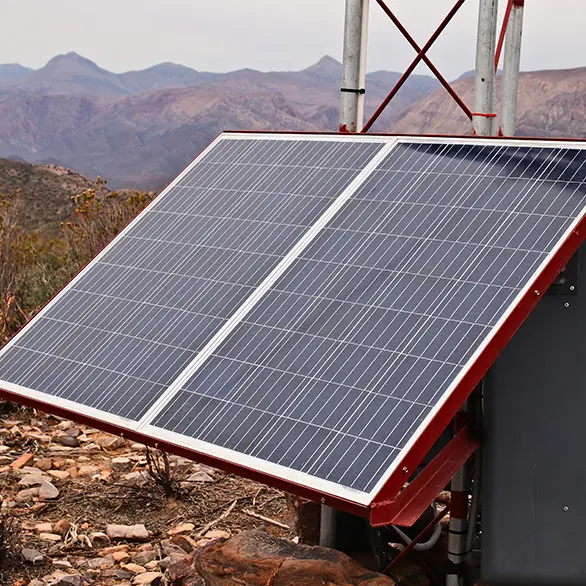
Crystal Structure: Made from multiple silicon crystal fragments (poly-crystalline) melted together to form the wafer.
Efficiency: Lower efficiency rates (13-16%) because the numerous crystals restrict electron movement, reducing power output.
Appearance: A distinct blue tint and often have a blockier or square appearance. Performance: Performance can diminish in low light, and they are more sensitive to temperature changes.
Cost: Lower manufacturing costs and price, making them more affordable.
Space Efficiency: Lower power output for the same area, requiring more panels to achieve the same power as mono PERC panels.

Key Considerations When Choosing
Budget: Polycrystalline panels are more cost-effective upfront.
Space: If you have limited roof space, the higher efficiency of mono PERC panels makes them a better choice.
Energy Output: Mono PERC panels generate more electricity from the same amount of sunlight, leading to potentially greater long-term savings despite higher initial cost.
Aesthetics: Mono PERC panels have a sleek black look, while polycrystalline panels have a more noticeable blue hue
Mono PERC Panels
Mono PERC and polycrystalline (poly) solar PV panels differ in their silicon crystal structure, efficiency, cost, and appearance. Mono PERC panels are made from single-crystal silicon with a PERC (Passivated Emitter and Rear Cell) technology for higher efficiency, offering better power production per square foot but at a higher upfront cost. Polycrystalline panels, made from melted silicon fragments, are less efficient and more affordable, featuring a distinct blue tint and appearing to be composed of many crystals.
- Crystal Structure: Use single-crystal silicon, providing a continuous crystal lattice for high-purity silicon.
- PERC Technology: Incorporate a passivation layer on the rear of the cell to reflect unused photons back into the cell, increasing overall light absorption and energy generation.
- Efficiency: High efficiency rates (15-22% or more), producing more power per square foot.
- Appearance: Uniform black appearance due to the single crystal.
- Performance: Perform slightly better in low-light conditions and are less sensitive to temperature variations.
- Cost: Higher manufacturing costs lead to a higher upfront price compared to polycrystalline panels.
- Space Efficiency: More power output from a smaller area
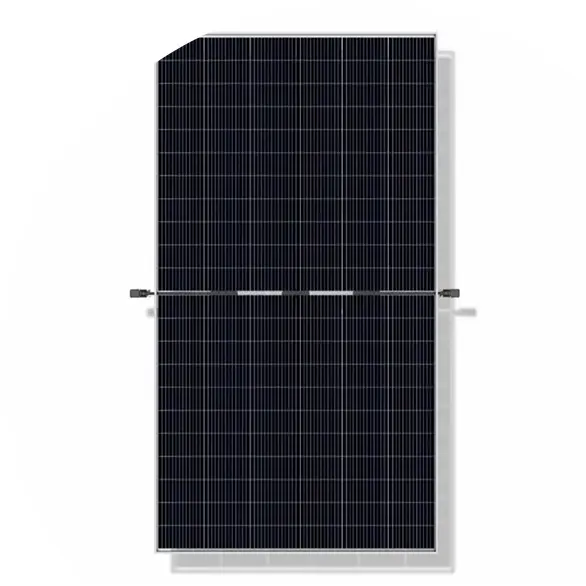
An N-Type TOPCon solar panel
is an advanced, high-efficiency solar module that combines N-Type silicon (doped with phosphorus) with TOPCon (Tunnel Oxide Passivated Contact) technology. This pairing creates highly efficient solar cells by minimizing energy-wasting electron recombination with a thin tunnel oxide layer and highly doped silicon layer, resulting in superior performance, lower degradation, and higher power output from a given area compared to traditional solar panels.
Key Features and Benefits
Higher Efficiency:
The TOPCon structure minimizes carrier recombination, leading to greater conversion of sunlight into electricity.
N-Type Silicon:
N-Type silicon uses a phosphorus doping, which provides more electrons and offers advantages like improved high-temperature performance and resistance to light-induced degradation (LID).
Tunnel Oxide Layer
A thin layer of tunnel oxide is applied to the silicon wafer. This layer acts as a barrier, blocking certain charge carriers while allowing others to pass, and is critical for the passivated contacts.
Passivated Contacts
The combination of the tunnel oxide layer and a highly doped silicon layer at the contacts prevents direct contact between the metal and the wafer. This “passivates” the surface, further reducing recombination losses and increasing efficiency.

Increased Energy Yield
Due to their high efficiency, N-Type TOPCon panels can generate more electricity from the same surface area, which can reduce the number of panels needed for a given installation.
Excellent Low-Light & High-Temperature Performance:
These panels show strong performance even in challenging conditions, such as low light and high temperatures, making them ideal for various cl
Lower Degradation
N-Type TOPCon modules have excellent Potential Induced Degradation (PID) resistance and essentially zero Light-Induced Degradation (LID), maintaining their efficiency over a longer operational lifespan.

Quick Links
Works address
5th Floor 508 Office, S No 52, Baner Business Bay, Pashan - Sus Rd, Pune Banglore Highway Pashan Exit, behind Audi, off Mumbai, Mohan Nagar Co-Op Society, Baner, Pune, Maharashtra 411045
Phone
Sales
+917219005592
O&M
+917219005549
info@renewxpert.com

