Project Based On Market Segments
Solar market segments include Residential, Commercial, and Utility-Scale applications; Photovoltaic (PV) and Concentrated Solar Power (CSP) technologies;
Solar market segments include Residential, Commercial, and Utility-Scale applications; Photovoltaic (PV) and Concentrated Solar Power (CSP) technologies; Monocrystalline, Polycrystalline, and Thin-Film solar module types; Ground-mounted, Rooftop, and Floating installation types; and On-grid, Off-grid, and Hybrid grid connections. These segments help analyze the diverse applications and technologies within the expanding solar energy industry.
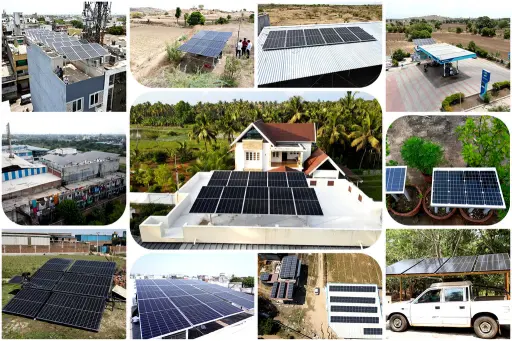
Commercial & Industrial (C&I): Businesses and factories using solar to power their operations and reduce costs. Utility-Scale: Large-scale solar power plants built by utilities for electricity generation and distribution to the grid. Public Infrastructure: Solar used for lighting, charging stations, and other public services.
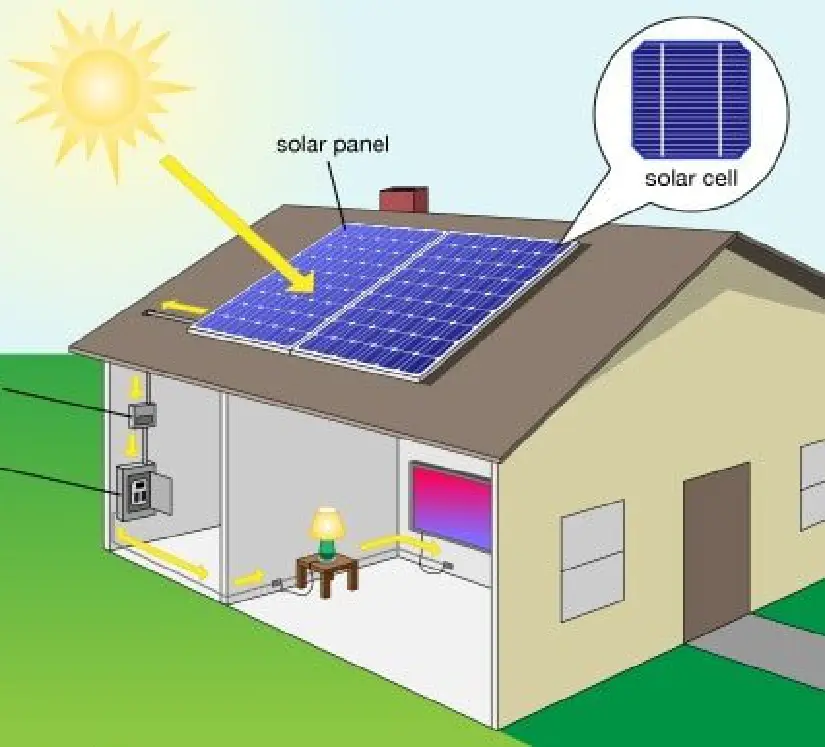
A domestic solar power plant, or residential solar system, uses rooftop photovoltaic (PV) panels to convert sunlight into electricity for a home’s self-consumption. These systems can be on-grid, sending excess power to the grid, or off-grid, using batteries for independent power. Key benefits include reduced electricity bills, energy independence, and contributing to a greener environment. The cost of installation depends on factors like panel quality and system size, and government subsidies may be available through schemes like the PM Surya Ghar Muft Bijli Yojana in India to lower the upfront investment.
Key Components

Solar Panels (PV Modules)
Capture sunlight and generate electricity.

Inverter
Converts DC electricity to AC electricity.

Mounting System
Secures the panels to the roof.

Batteries (for off-grid systems)
Store excess electricity.

Charge Controller (for off-grid systems)
Regulates the power flow to and from the batteries.
residential
How it Works
- Sunlight Absorption : Solar panels are made of semiconductor materials that capture sunlight.
- Electricity Generation: When sunlight hits the panels, it generates direct current (DC) electricity.
- Inversion: A solar inverter then converts this DC electricity into alternating current (AC) electricity, which is the type used in homes.
- Power Usage/Storage : On-Grid Systems: The electricity is used in the home, with any excess power supplied to the public grid, potentially earning the homeowner credits via net metering.
- Off-Grid Systems: Excess power is stored in batteries for use at night or during cloudy days, allowing the system to function independently of the grid
Cost Factors
The price of a residential solar system is influenced by the type and quality of panels, inverters, and other components, as well as the overall system size.
Government Subsidies
Schemes like the PM Surya Ghar Muft Bijli Yojana offer subsidies to households, reducing the initial installation costs.

How to Get Subsidy!!!
- Apply Online: Visit the National Portal for Rooftop Solar or a similar platform to apply for the scheme.
- Feasibility Approval: The DISCOM (distribution company) will assess the feasibility of the installation.
- Choose a Vendor: Select a registered vendor to install the system on your rooftop.
- Installation & Inspection: The vendor installs the system, and the DISCOM conducts inspections to ensure compliance.
- Receive Subsidy: After the final inspection and certification, the subsidy amount is transferred to your bank account.
Commercial Feasibility:
t’s a Reliable, Cost-Effective Energy as compared to other electrical sources and offers good ROI. It Saves Your Money in the Long Run and no dependency on grid power supply in case of Off-Grid Solar Power project. It Creates Jobs and Spurs Economic Growth.
Lower Electricity Bills:
Reduces reliance on grid power, leading to significant savings on monthly electricity costs.
Energy Independence:
Provides a reliable power source, especially useful during power outages for on-grid systems and entirely for off-grid systems. It Promotes Energy Independence to remote area.
Environmental Impact:
Generates clean energy, reducing your home’s carbon footprint. In India adequate sunlight is available throughout the year hence solar projects are viable. It’s Good for an Environmental balance where through natural resources, we are reducing pollution. Solar Energy is renewable and generate both power and heating solutions.
Benefits

INDUSTRIAL
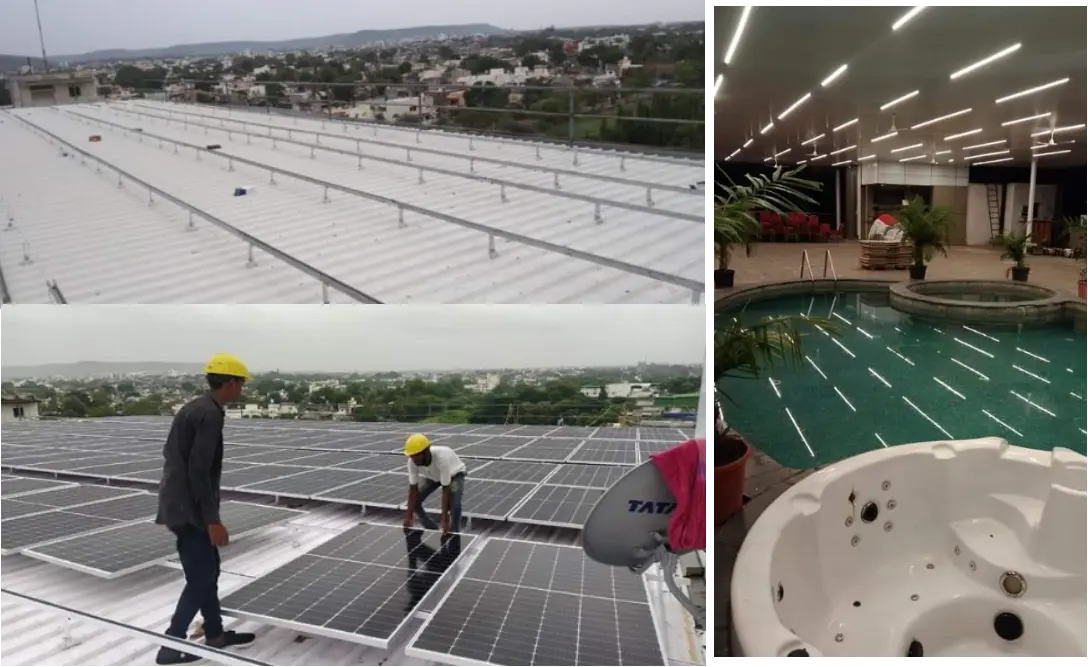
Industrial solar installation involves setting up large solar power systems on factories and warehouses to generate clean electricity for high energy demands, reducing costs and environmental impact. These projects, which can be rooftop or ground-mounted, require specialized engineering and can significantly cut electricity bills, often yielding a return on investment within a few years through government subsidies and tax benefits
Types of Industrial Solar Installations
Rooftop Solar: Solar panels are mounted on the roofs of industrial buildings, including metal sheds and RCC roofs, utilizing available space.
Ground-Mounted Solar: Large open land spaces adjacent to the industrial facility are used to install large solar arrays.
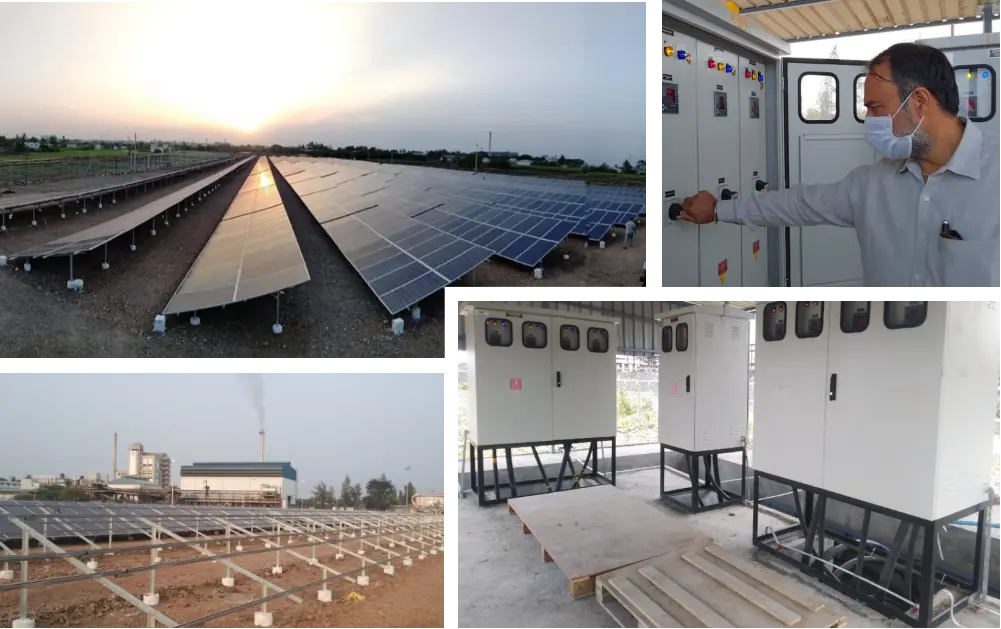
Another best option is through Open Access in captive, group captive and PPA model
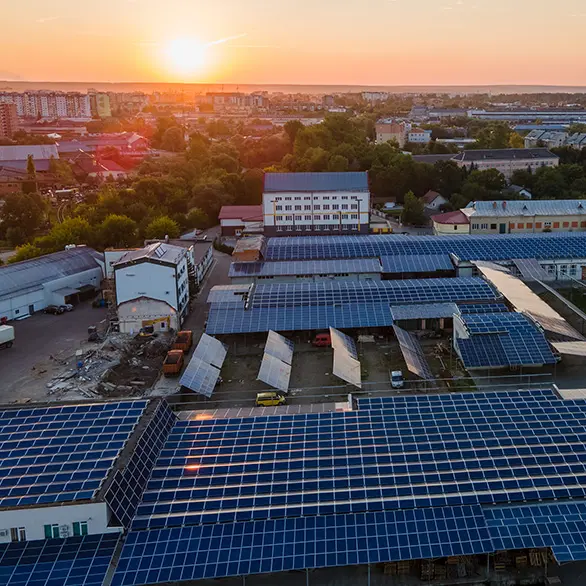
Solar Carports: A combination of providing covered parking and generating clean energy from the parking lot area. Benefits of Industrial Solar Installation
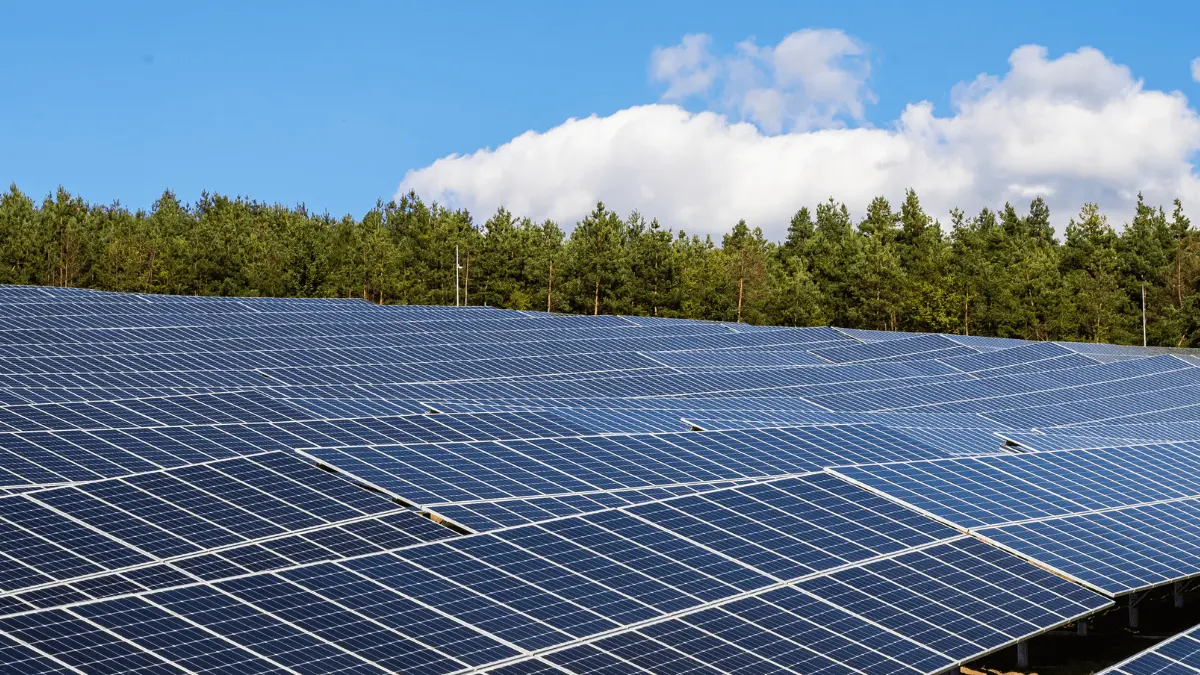
An “industrial large scale open access installation” is a system where a large industrial consumer installs an off-site solar power plant to supply electricity to their facility, using the existing power grid for transmission. Companies benefit from lower, stable electricity costs, reduced carbon footprint, and greater energy independence, typically through a Power Purchase Agreement (PPA) with a solar developer. Eligibility in India generally requires a minimum contracted demand of 1 MW and approvals from state regulators like the Maharashtra Electricity Regulatory Commission (MERC)
Key Components & Process

Off-site Solar Plant
The power is generated at a solar farm or plant, not at the industrial site itself.

Power Purchase Agreement (PPA)
The industrial consumer signs a long-term contract with a solar developer to purchase the generated power.

Grid Infrastructure:
The electricity is delivered from the off-site solar plant to the industrial consumer’s facility via the state’s existing transmission and distribution (T&D) grid.

Energy Meters
Special meters are installed to record power usage in 15-minute intervals for billing and accounting
Regulatory Approvals
Businesses must obtain approvals from the State Load Dispatch Centre (SLDC) and the State Electricity Regulatory Commission (e.g., MERC in Maharashtra) to ensure compliance.
Eligibility & Requirements (Example: Maharashtra)
Minimum Contract Demand : Often a minimum demand of 1 MW is required.
Regulatory Compliance : Obtain necessary permissions from the State Load Dispatch Centre (SLDC) and the State Electricity Regulatory Commission.
Technical Specifications : Meet the technical and contractual requirements for smooth energy transmission.
Eligibility & Requirements (Example: Maharashtra)
Minimum Contract Demand : Often a minimum demand of 1 MW is required.
Regulatory Compliance : Obtain necessary permissions from the State Load Dispatch Centre (SLDC) and the State Electricity Regulatory Commission.
Technical Specifications : Meet the technical and contractual requirements for smooth energy transmission.
COMMERCIAL
Types of Industrial Solar Installations
Rooftop Solar: Solar panels are mounted on the roofs of industrial buildings, including metal sheds and RCC roofs, utilizing available space.
Ground-Mounted Solar: Large open land spaces adjacent to the industrial facility are used to install large solar arrays. Another best option is through Open Access in captive, group captive and PPA model
Solar Carports: A combination of providing covered parking and generating clean energy from the parking lot area. Benefits of Industrial Solar Installation
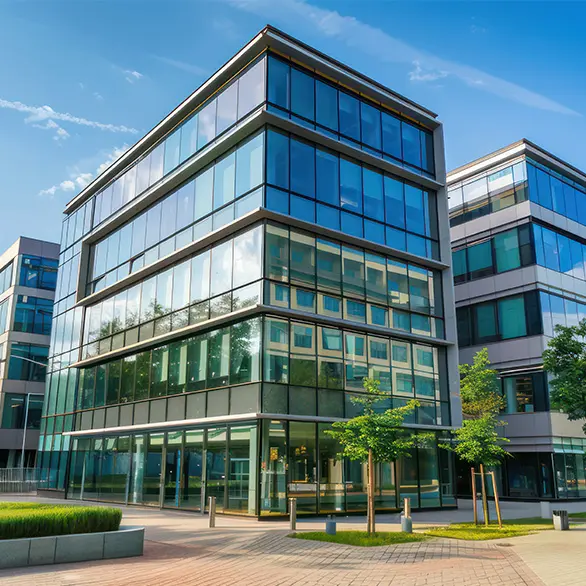
Retail & Services: Shops, tailor shops, computer training institutes, beauty parlors, salons, photo labs, internet/cyber cafes, mobile shops, and telephone booths.
Hospitality: Restaurants, hotels, resorts, canteens, cafeterias, ice cream parlors, and coffee shops.
Financial & Communications: Banks, ATM centers, and telephone exchanges.
Professional Offices: Lawyers, doctors, engineers, chartered accountants (when using residential premises for their professional activity but not nursing homes).
Community & Recreation: Sports clubs, health clubs, gymnasiums, swimming pools (if within residential complexes), and public libraries.
Other: Exhibition centers, warehouses/godowns, logistics and transportation services, and toll collection plazas. Key Considerations Non-Residential Use: The primary factor is that the premises is used for non-residential or commercial purposes.
Broad Applicability: The definition is broad to capture a wide array of activities that support the commercial sector.
Specific Exclusions: Certain entities, such as nursing homes and hospitals (even if in a residential premise), are specifically excluded from some commercial categories, according to Tata Power’s guidelines.
Tariff Applicability: The determination of “commercial” is crucial for applying the correct electricity tariff rates and regulations set by MERC
PUBLIC SECTOR
Types of Industrial Solar Installations
Rooftop Solar: Solar panels are mounted on the roofs of industrial buildings, including metal sheds and RCC roofs, utilizing available space.
Ground-Mounted Solar: Large open land spaces adjacent to the industrial facility are used to install large solar arrays. Another best option is through Open Access in captive, group captive and PPA model
Solar Carports : A combination of providing covered parking and generating clean energy from the parking lot area. Benefits of Industrial Solar Installation


Quick Links
Works address
5th Floor 508 Office, S No 52, Baner Business Bay, Pashan - Sus Rd, Pune Banglore Highway Pashan Exit, behind Audi, off Mumbai, Mohan Nagar Co-Op Society, Baner, Pune, Maharashtra 411045
Phone
Sales
+917219005592
O&M
+917219005549
info@renewxpert.com

