Stand Alone Offgrid
Solar products are the creation of photovoltaic system to an application
e.g., Solar Water Pump, Water Pump needs an external power, energy, force to run and operate the motor. With the help of solar photovoltaic power, generated electricity which is available into two forms DC & AC both the forms operates the motor and many other applications.
Solar Operated Equipment’s / Devices & Systems
Environment & Sustainability- Adoption of Solar Power
Adopting solar power significantly benefits the environment by reducing pollution and greenhouse gas emissions, promoting a greener and more sustainable future. Solar energy is a clean, renewable resource that generates electricity without emitting harmful pollutants, unlike fossil fuels. This contributes to air quality improvement, climate change mitigation, and resource conservation. Environmental Benefits of Solar Power Adoption
Reduced Carbon Footprint :
Solar power reduces the reliance on fossil fuels, which are major sources of carbon emissions. This leads to a decrease in greenhouse gas concentrations in the atmosphere, mitigating climate change.
Lower Air Pollution :
Solar panels operate without emitting harmful pollutants, leading to cleaner air quality. This is especially beneficial in urban areas where air pollution is a major concern.
Water Conservation
Traditional power plants require large amounts of water for cooling, while solar panels use minimal water. This helps conserve water resources, particularly in regions facing water scarcity.

Resource Preservation
Solar energy utilizes the sun’s inexhaustible energy, which reduces the need for extracting and burning fossil fuels. This helps preserve natural resources like coal, oil, and natural gas, and reduces the environmental impacts associated with their extraction.
Sustainable Development :
Solar energy adoption promotes sustainable practices by reducing energy consumption, conserving resources, and mitigating the effects of climate change.
Solar energy offers numerous uses in rural areas, addressing diverse needs like electrification, irrigation, and community development. It provides a sustainable and cost-effective alternative to traditional energy sources, improving quality of life and supporting economic growth.
Here’s a breakdown of key applications:
- Electrification & Home use Products:
- Agriculture/Irrigation use:
- Economic and Social Development:
1. Electrification & Home use Products:
1. Independent Solar Off grid/ On grid Power Plant:
solar power can be implemented through both on-grid and off-grid systems. On-grid systems connect to the existing utility grid, allowing for cost-effective electricity generation and the possibility of earning credit through net metering. Off-grid systems, on the other hand, offer energy independence, particularly useful in remote areas, but require batteries and may have higher initial costs and maintenance.
Use in Lightning of Schools, Community Places and PHC
It is hard for schools , Community places and health centres to maintain reliable electricity, which thereby hampers education, social gatherings and healthcare provision.
Independent Solar Off grid/ On grid Power Plant:
Powering the lights, fans, and simple medicinal equipment in village clinics.
Powering the hall lights, fans, loudspeakers and misc. electricity requirements in a social gathering at a community hall/place
Making digital learning easy at school, therefore making computers and projectors more accessible.
These advancements improve the living standards and, in the long run, sustain rural development.
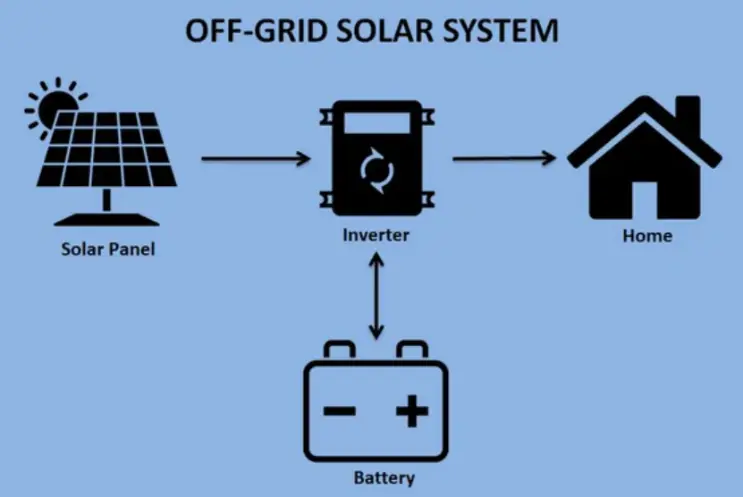
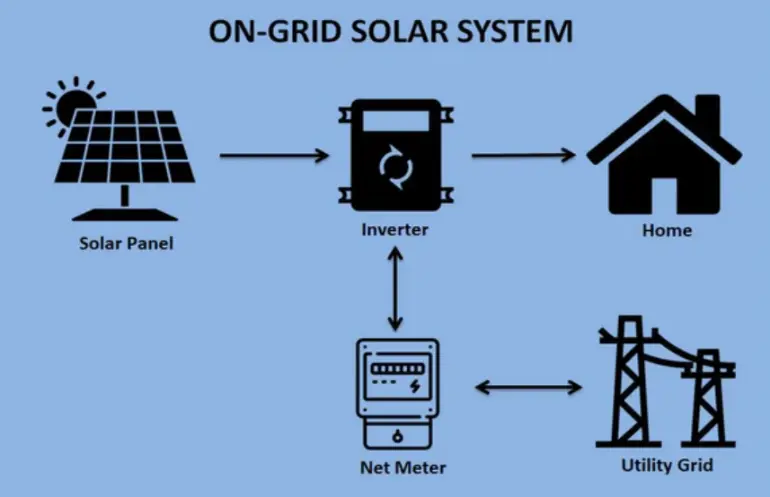
1.2 Solar Microgrid
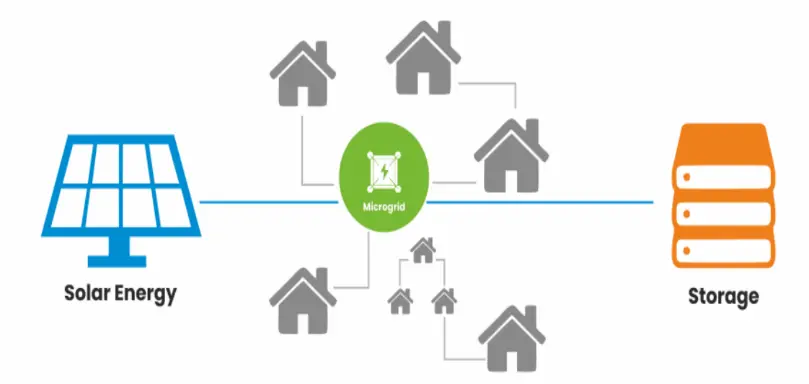
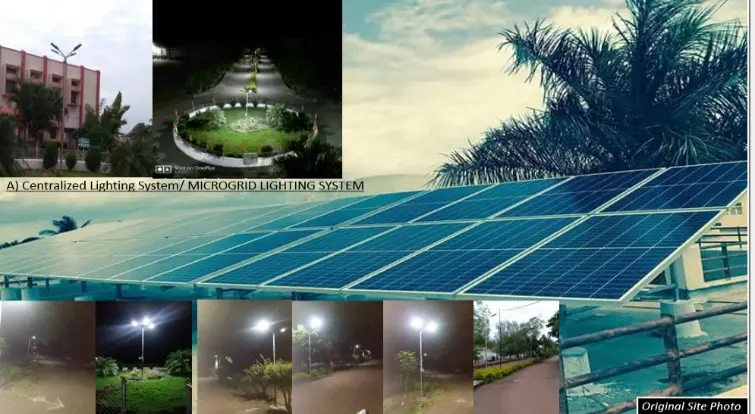
A solar microgrid is a localized electricity grid that relies on solar power, often incorporating energy storage like batteries, and can operate independently of the main power grid. It’s designed to serve specific communities, buildings, or even individual homes with clean, renewable energy.Solar microgrids can provide electricity to remote areas where grid access is limited or unreliableTo small villages where the power grid is not economically viable to extend, solar microgrids offer a renewable source of energy.These microgrids provide continuous power supply to houses, small businesses, and even street lights.
A solar microgrid lighting system is a localized energy system that uses solar panels to generate
Outcome/Benefits of Microgrid Solar
Reduction in Transmission Loss
Reliable Energy Supply for critical loads
Revenue generation
1.3 Solar Street lights:
Solar streetlights are raised light sources which are powered by solar panels generally mounted on the lighting structure or integrated into the pole itself. The solar panels charge a rechargeable battery, which powers a fluorescent or LED lamp during the night.
Provision of solar streetlights in poorly lit common areas of villages ensures safety and security, especially for women, young girls, and the elderly. It also provides protection against wild animals and facilitates evening activities and studies for children.
Outcome/Benefits of Solar Street Lights:
- Independent application, no need for grid connection and no power cuts
- Long life and maintenance free
- No external wiring, hence, accident risk is less.
- Provides lighting in remote places where grid is not possible.
- Enhances safety and security
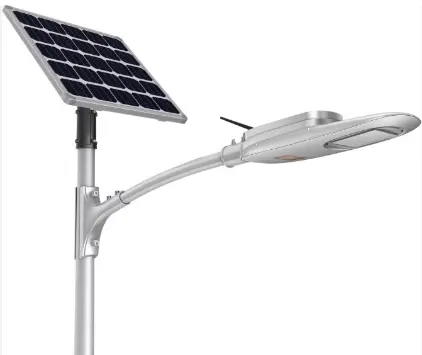

1.4 Solar Street Lights with CCTV Cameras
Integrating solar street lights with CCTV cameras offers a comprehensive security solution for rural villages, addressing safety and security concerns in areas with limited or no electricity grid access. This approach combines the benefits of illumination from solar street lights with the deterrent and monitoring capabilities of CCTV cameras, creating a safer and more secure environment.
Outcome/Benefits of Solar Steer Lights with CCTV:
Enhanced Safety and Security: Solar street lights illuminate public spaces, making them safer and reducing the risk of accidents, especially at night. The presence of CCTV cameras further enhances security by deterring criminal activity and providing a visual deterrent.
Deterrence of Crime: The awareness that areas are being monitored by CCTV cameras can discourage potential wrongdoers, reducing the likelihood of theft, vandalism, and other crimes.
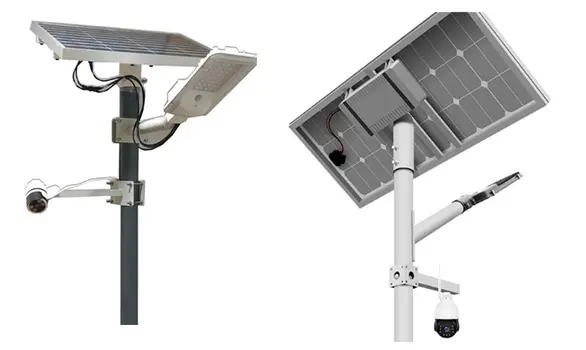
Cost-Effective and Sustainable: Solar street lights powered by solar panels eliminate the need for grid connections, reducing costs and making them a sustainable solution
Improved Quality of Life: Better lighting and increased safety contribute to a higher quality of life for residents, allowing them to move around more freely and safely, especially during evening and night hours
Monitoring and Surveillance’s cameras can capture footage of any suspicious activity, which can be used to investigate incidents and potentially apprehend criminals.
1.5 Mini Solar Kits for Home/ Home Lighting:
Mini solar Kits for households without electricity, offer an energy-saving and cost-effective solution.These kits power small homes, providing light and mobile charging facilities this kit can be also used by individual in agri-fields where there is no grid connections to fulfill basic need of power for charging mobiles and basic illumination.
Outcome/Benefits of Mini Solar Kits:
Saves energy costs.
Portale and easy to use, can be carried anywhere
Provides a sustainable, renewable energy source
1.6 Solar water heaters :
Solar water heaters (SWHs) are the simplest application of solar thermal technology using free energy from the sun to provide hot water for any applications ranging from domestic to industrial. Solar water heating systems include water storage tanks, piping systems, and solar collectors. They are a mature technology, pollution-free, cost-effective, and result in significant savings on electricity bills.
Solar water heater of Solar water heaters (SWHs) of 100-500 liters per day (LPD) capacity are suited for domestic use. Larger systems can be used in dharamshalas (guest houses), restaurants, canteens, hotels, hospitals, etc.
Outcome/ Benefits of Solar Water Heater:
Hotwater throughout the year
Reduced carbon footprint
Easy to use and maintenance free
2. Agriculture/Irrigation Use:
2.1 Solar Water Pump
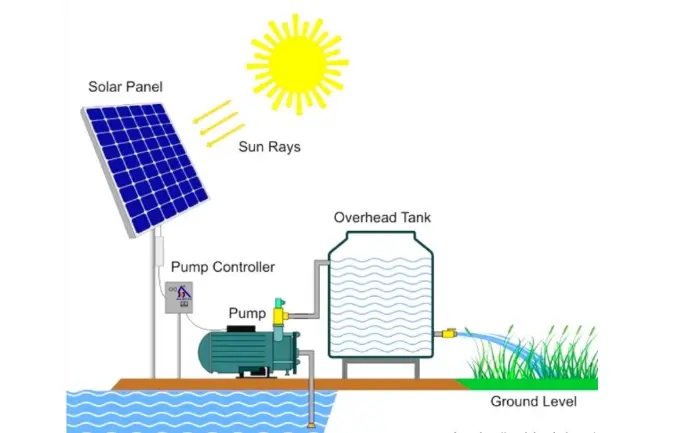
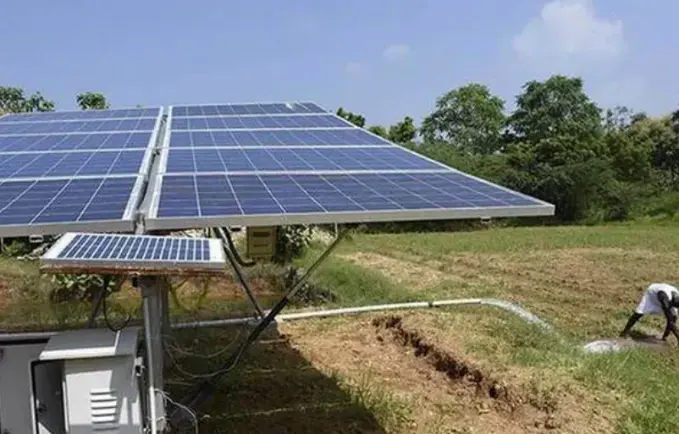
Solar water pumps are widely used in agriculture for irrigation and other water needs, offering a sustainable and cost-effective alternative to traditional methods. They use solar panels to generate electricity, which powers the pump, drawing water from various sources like wells, ponds, and rivers. Here’s a more detailed look at their agricultural applications:
Irrigation:
Solar water pumps provide a reliable and consistent water supply for irrigating crops, ensuring optimal growth and yield, especially in areas with erratic grid supply or limited access to fuel.
They can be used with various irrigation methods, including drip irrigation, sprinkler irrigation, and flood irrigation.
Farmers can use solar water pumps to deliver water to their fields, reducing reliance on traditional methods like diesel generators and improving water management efficiency.
2.2 Solar Fencing
The Solar Fence system is a modern-day alternative to conventional methods of fencing to protect your crops & property. Electric Fence is an effective way to reduce losses caused by animals. Solar fencing combines the traditional electric fence design with solar power to create a secure and eco-friendly perimeter. It uses solar panels to power the electric fence, delivering a brief, non-lethal shock to deter intruders. The system typically includes solar panels, a battery, a charge controller, and an energizer.
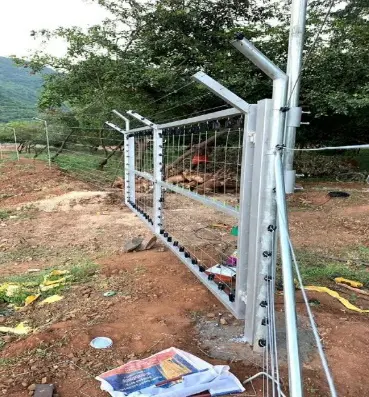
Outcome/Benefits of Solar Fencing:
Strong protection against unauthorized access
Security to your property
Trespassing can be easily controlled
Works 24 X 7, Safe but effective deterren
Easy to install
2.3 Solar Dryer
Solar dryers, which utilize solar energy to dry agricultural products, offer a sustainable and efficient alternative to traditional drying methods. They help reduce post-harvest losses, improve product quality, and minimize energy consumption, especially in areas with limited electricity access.
Need of solar dryer:
Solar dryers prevent spoilage by removing moisture from food, making it less susceptible to microbial growth.
Dried food can be stored for extended periods, improving food security and reducing waste.
The closed system of a solar dryer minimizes contamination from dust, insects, and animals.
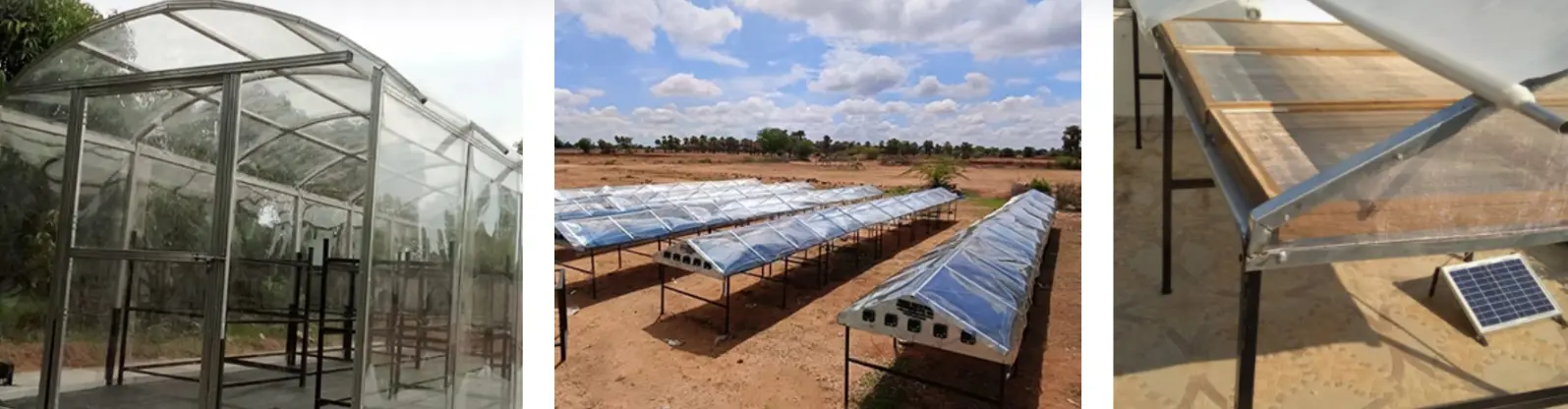
Outcome/Benefits of Solar Dryer
The closed system of a solar dryer minimizes contamination from dust, insects, and animals.
Farmers can transform surplus crops into dried, preserved products, creating new income opportunities.
Solar drying is a sustainable and eco-friendly drying process, minimizing environmental impact.
2.4 Solar Insect Traps
Solar Insect Trap Attracts Almost All the Flying Insects (Pest) on All Types of Crops which have the problem of Pests. Therefore, Farmers will Save Huge Money which They Spent on Pesticides. Also, Solar Trap is Fully Automatic, which when Installed Works Automatically.it is also useful in cattle shed ,poultry shed, polyhouses. It is more useful in organic faming
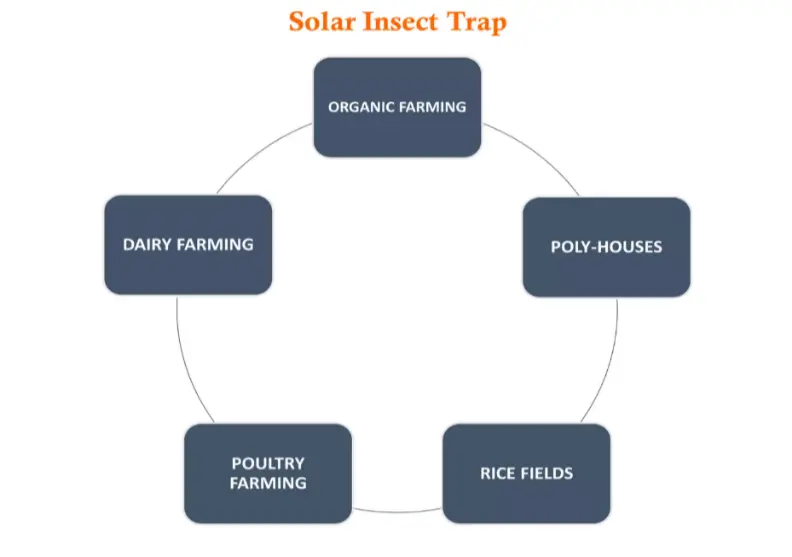
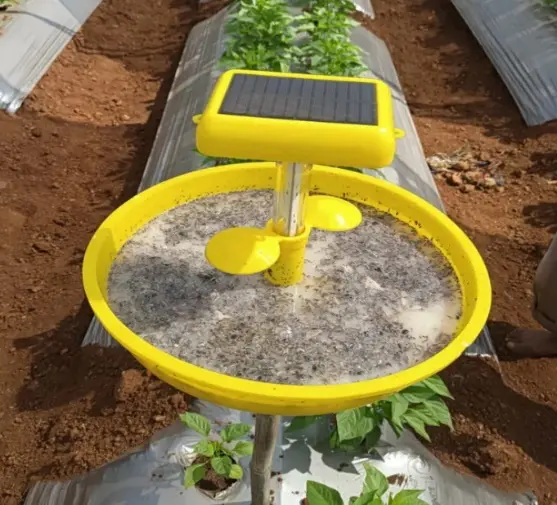
Outcome/Benefits of Solar Dryer
Eco-friendly: Solar insect traps use renewable energy (sunlight) and do not require chemical pesticides or insecticides, making them environmentally safe.
Cost-effective: They are powered by solar energy, reducing energy costs and can be less expensive than traditional pest control methods
24/7 Operation: Some solar insect traps are designed to operate continuously, including during rainy conditions, when other pest control methods might be ineffective.
Targeted pest control: Solar traps are designed to specifically attract harmful insects, minimizing harm to beneficial insects like pollinators.
3. Economic and Social Development Supporting Local Business
3.1 Solar Cold Storage:
Solar cold storage offers a sustainable and cost-effective solution for preserving perishable goods in rural areas. It utilizes solar power to operate refrigeration systems, reducing reliance on traditional power sources and extending the shelf life of produce. This technology helps farmers minimize post-harvest losses, improve income, and access markets more effectively
Ripening: Solar cold storage can be used to ripen fruits and vegetables, allowing farmers to market them at the optimal stage of ripeness.
Outcome/Benefits of cold storage
Post-Harvest Storage: Solar cold storage can be used to store produce immediately after harvest, preventing spoilage and allowing farmers to sell it at a later time.
Pre-Cooling: Solar cold storage can pre-cool produce, ensuring its quality and extending its shelf life during transportation to markets
Small-Scale Fish Production: Solar cold storage can help promote small-scale fish production by providing a sustainable means of preserving catches.
Dairy Products: Solar cold storage can be used to store milk and other dairy products, ensuring their freshness and quality.
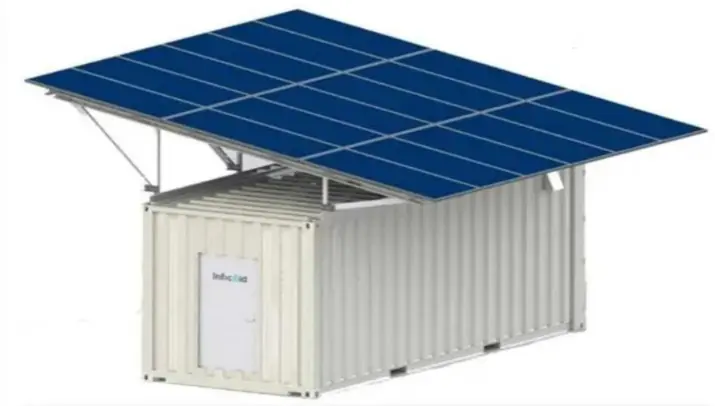
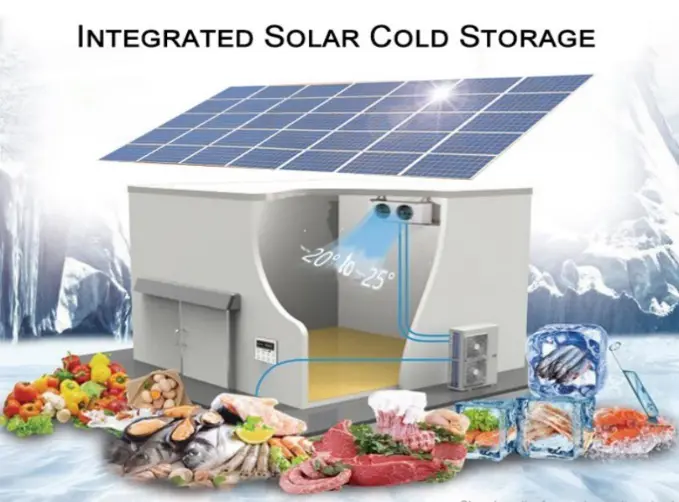
3.2 Solar Flour Mill ( Atta Chakki )
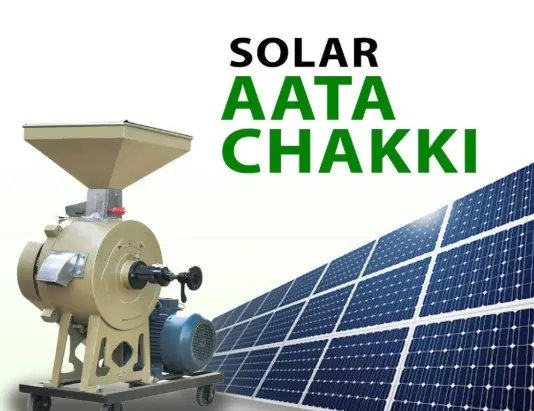
A solar atta chakki, or solar-powered flour mill, is a flour mill that uses solar energy to grind grains. Instead of relying on electricity from the grid or diesel generators, solar panels capture sunlight and convert it into electricity, which then powers a motor to drive the grinding stones. This makes solar atta chakkis a cost-effective, eco-friendly, and reliable alternative to traditional flour mills.
Outcome/Benefits of Flour mill
Reduced electricity bills : Solar panels can significantly reduce or eliminate electricity bills, leading to substantial savings over time.
No diesel costs : Diesel-powered atta chakkis have high fuel expenses, while solar systems offer free electricity from the sun
Quiet operation: Solar-powered chakkis operate silently, unlike noisy diesel engines, making them suitable for urban and rural environments.
Energy independence : Solar atta chakkis offer energy independence, especially in rural areas with unreliable grid access.
Boosts rural economy : Solar-powered atta chakkis can empower farmers and small businesses, encouraging local entrepreneurship and strengthening the community's economy.
3.3 Solar Smart Shelter
Idea behind Solar Smart Shelter has come from our own personal experience and some market insights. Most of the time while travelling on State/National highway it is difficult to find the exact location of a particular rural village on highway and the adjoining villages nearby to highway, especially in the night time it becomes more difficult as there are no proper bus stop/indications (signboards), or some bus stop lack proper illumination or are not maintained properly. Also there are no bus stops available in most of the small villages and passengers stand in some corners of the road without shelter as the buses stop on the road which may lead to traffic congestion. There are no proper sanitary blocks available on regular intervals on highway and most of the times and we see people urinating on roads due to lack of toilets. Urinating on roads may be a huge embarrassment for a female passenger. By implementing this smart bus shelter it will be easy to identify the villages and nearby village locations stop for a private vehicle /buses while travelling on highway and they can also use the toilets any time.
Solar Smart Shelter is a fabricated rugged steel structure with advertising boards on it and takes care of basic need of commuter like charging facility for laptop and mobile it also has facility of a Urinal only for female commuters and. The main feature of this shelter is that it is operated through solar energy which is a source of clean and green energy and Environment friendly and is a standalone unit. This Solar Smart Shelter has following components:
- Bus Stop
- Smart Box
- E Toilet Urinals for Female
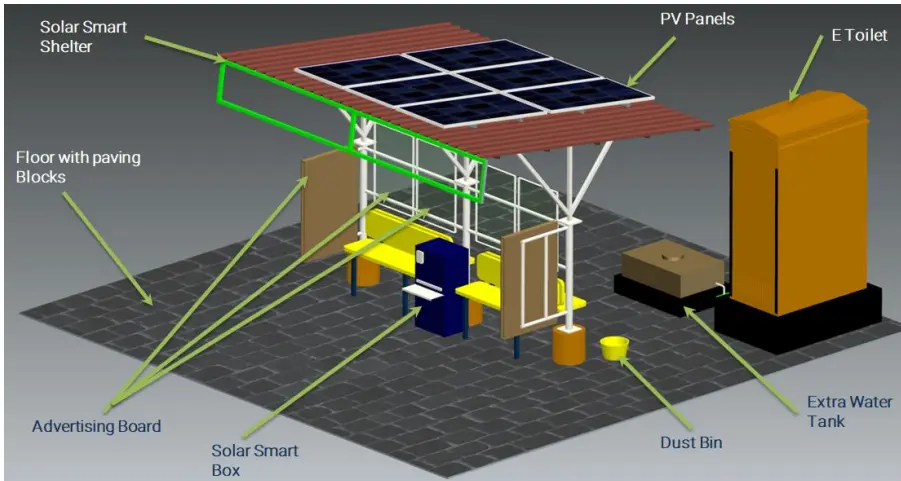
It provides shelter to commuter from rain/sun.
It provides clean drinking water to commuter.
It has provision for users to charge their phones/laptops other electronic devices.
It provides information on emergency contacts and nearby village information.
It provides clean sanitation thru smart toilets/Urinals with inbuilt auto flush cleaning.
Their maintenance cost can be taken care by advertisements to ensure the durability of the project
3.4 Solar E Toilet
Solar e-toilets offer a sustainable and hygienic sanitation solution for villages, particularly in areas with limited access to electricity or water. They utilize solar panels to power pumps, lights, and automated features like pre-flushing and post-flushing. Some designs also include features like self-cleaning floors and waste treatment systems.
Here’s a more detailed look:
Water Management:Micro-pumps powered by solar panels can draw water from nearby sources and store it in tanks, ensuring a continuous water supply for flushing.
Automation:Sensors and automated systems can control pre-flushing, post-flushing, and floor cleaning, improving hygiene and efficiency.
Waste Treatment: Some e-toilets incorporate waste treatment systems that use anaerobic digestion or other methods to treat waste and potentially produce biogas.
Self-Cleaning:Features like automatic floor cleaning after a set number of uses can significantly reduce the need for manual cleaning and improve hygiene.
users to locate the nearest e-toilets.
Location and Availability:Some e-toilet systems have developed apps that allow users to locate the nearest e-toilets
Remote Monitoring:Some systems include remote monitoring capabilities, allowing for the tracking of usage patterns, water consumption, and other data.
Accessibility:E-toilets can be designed with features like accessible entrances, ramps, and wide doorways to ensure accessibility for all users.
Outcome/Benefits of E Toilet
Improved Sanitation:E-toilets offer a more hygienic and convenient sanitation option compared to traditional pit latrines.
CommunityEmpowerment : Solar-powered systems can provide a reliable power source for other village needs, promoting community development
Reduced Water Usage:Some e-toilets use significantly less water per flush than traditional toilets.
Economic Benefits:E-toilets can reduce the need for manual cleaning and waste disposal, potentially leading to cost savings for the community
Environmental Sustainability:Solar-powered systems reduce reliance on fossil fuels and can be designed to minimize environmental impact.
Their maintenance cost can be taken care by advertisements to ensure the durability of the project
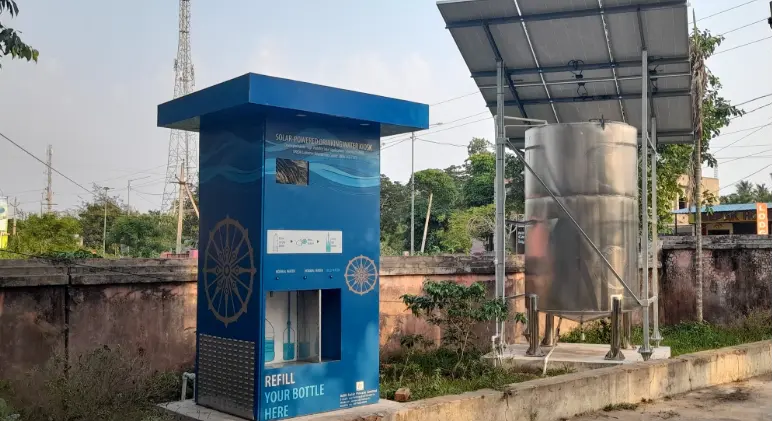
3.5 Solar Water ATM
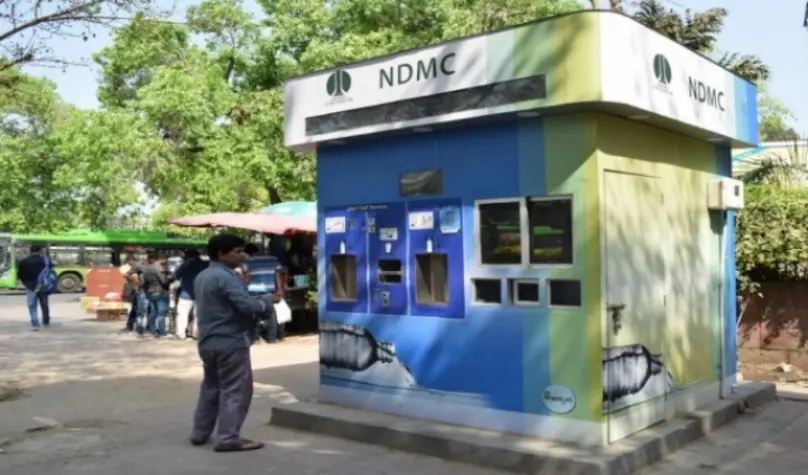
Solar water ATMs are automated water dispensing units powered by solar energy, designed to provide clean drinking water to communities, especially in areas with limited or unreliable electricity access. These ATMs typically use a combination of filtration methods like reverse osmosis and UV sterilization to ensure water purity.
Water Intake: Typically, the ATM draws water from a local source (like municipal water or groundwater).
Filtration: The water undergoes multiple stages of filtration, including reverse osmosis, UV sterilization, and other processes to remove impurities and pathogens.
Storage: Purified water is stored in a tank within the ATM.
Dispensing: Users can access water by using a card, mobile app, or coin insertion, depending on the ATM’s configuration.
Payment: Payment can be made via swipe cards, mobile apps, or coin mechanisms.
Remote Monitoring: Some ATMs are equipped with remote monitoring systems that allow for data collection and system maintenance.
Data Tracking:Some ATMs track water usage and can provide valuable data for monitoring water quality and demand.
Outcome/Benefits of E Toilet
Solar Power:Operate independently of the traditional electricity grid, making them suitable for remote or underserved areas.
Filtration and Purification:Use advanced filtration systems (like RO) to remove impurities and bacteria from the water, ensuring safety.
Accessibility : Provide convenient access to clean water for communities, often at a nominal price, reducing water-related health risks.
Community-Based:Collaborations with local governments, NGOs, and self-help groups help integrate these ATMs into communities, ensuring sustainability and local ownership.
Cost-Effective:Lower long-term operating costs compared to traditional water sources due to reliance on solar power.
Solar Batteries
Solar Batteries are designed in such a way that they can store the energy which can be stored with an off-grid and hybrid solar system. Solar batteries are developed in order to connect the solar charger or solar inverters fr the backup. With solar batteries, you can able to store the excess amounts of energy by the solar panels during the day and used them at night. Installing solar batteries at home helps you to use more solar power. Once the batteries are charged, they are able to transmit the power into the grid.
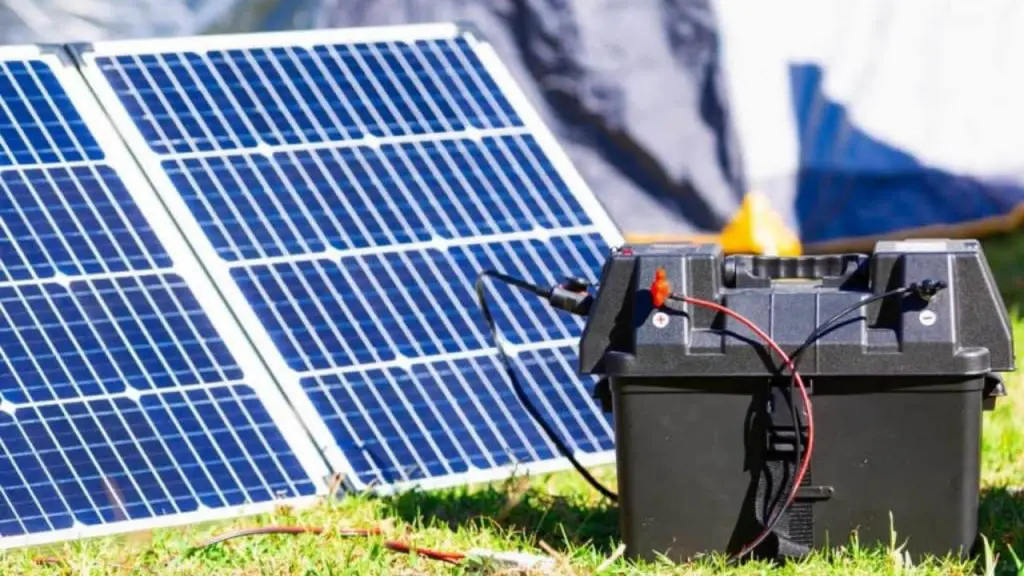
Lithium-ion Solar Battery has a long cycle life. These batteries have high charge and discharge capabilities which helps in harvesting more energy from the solar panels. These batteries are used to run solar street lights and solar power vehicles. these batteries are safe and stable for 15 -20 years and also maintenance-free.
Tall Tubular Solar Battery:
Tall Tubular Solar Battery is the better version of the normal Solar Charged Batteries which can be utilized in-home or other places. these batteries are fully are used in off-grid solar systems, hybrid solar systems, solar home lighting systems, and solar street lights. It was required to top up with water for every 3-6 months and was able to store more power than any other battery.
Use Of Solar Batteries:
Energy Independence: The solar battery will helps to keep the lights on and also helps to charge the phones in time of power cut.
Quiet Backup power: Solar batteries provide the backup when the grid goes down.
Electric bill savings: These solar batteries help in saving electric bills.
Solar Generators
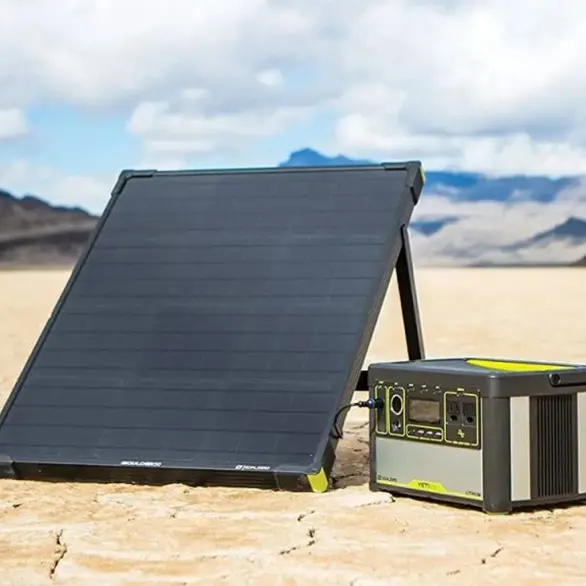
Solar Generators are portable generators which is consist of solar panels, solar panel batteries, and a battery charger. The solar panels present in the solar generator helps in capturing the solar energy and then transferring solar energy in the battery to generate electricity. These inverters then take that energy and then convert it from DC to AC before releasing it.
Use Of Solar Generators:
Free fuel from the sun: The solar generator costs no fuels so it totally frees of cost.
Clean and renewable energy: Solar generator is mainly relied on the clean and renewable energy. This generates zero pollutants when they produce or store energy.
Quiet and low maintenance: Another great advantage of this generator has no sound. Also, it helps in reducing the amount of maintenance.
Solar Rickshaws
Solar Rickshaws are mainly controlled by the solar battery which is charged by solar power. The rikshaw also has solar panels which help in generating the electricity through which the rikshaw can activate easily. These solar cells are made up of tiny solar cells that are beneficial for converting solar energy into electricity.
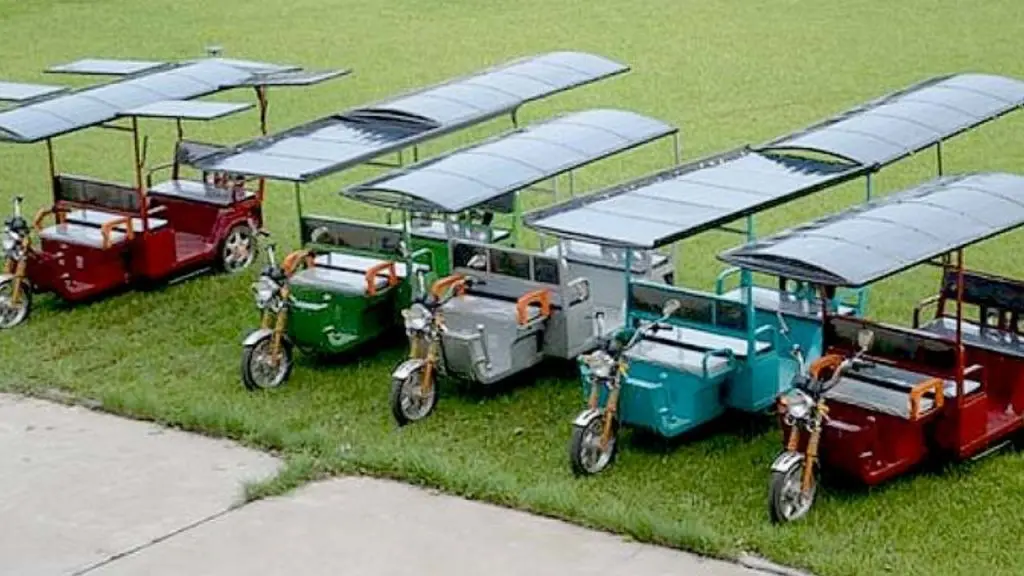
Use Of Solar Rikshaws:
- Contribute to Zero Contamination: The solar rikshaw run by the solar energy so there is no smoke outflow when the rikshaw is driven.
- Better And Affordable Maintenance: this rikshaw so not need a huge amount of maintenance.
- Earing high wages with less consumption: The Solar Rikshaw is a huge asserts in the Indian market as it has a huge profit as it do not need any kind of the fuel and also it is very easy for maintenance.

Quick Links
Works address
5th Floor 508 Office, S No 52, Baner Business Bay, Pashan - Sus Rd, Pune Banglore Highway Pashan Exit, behind Audi, off Mumbai, Mohan Nagar Co-Op Society, Baner, Pune, Maharashtra 411045
Phone
Sales
+917219005592
O&M
+917219005549
info@renewxpert.com

